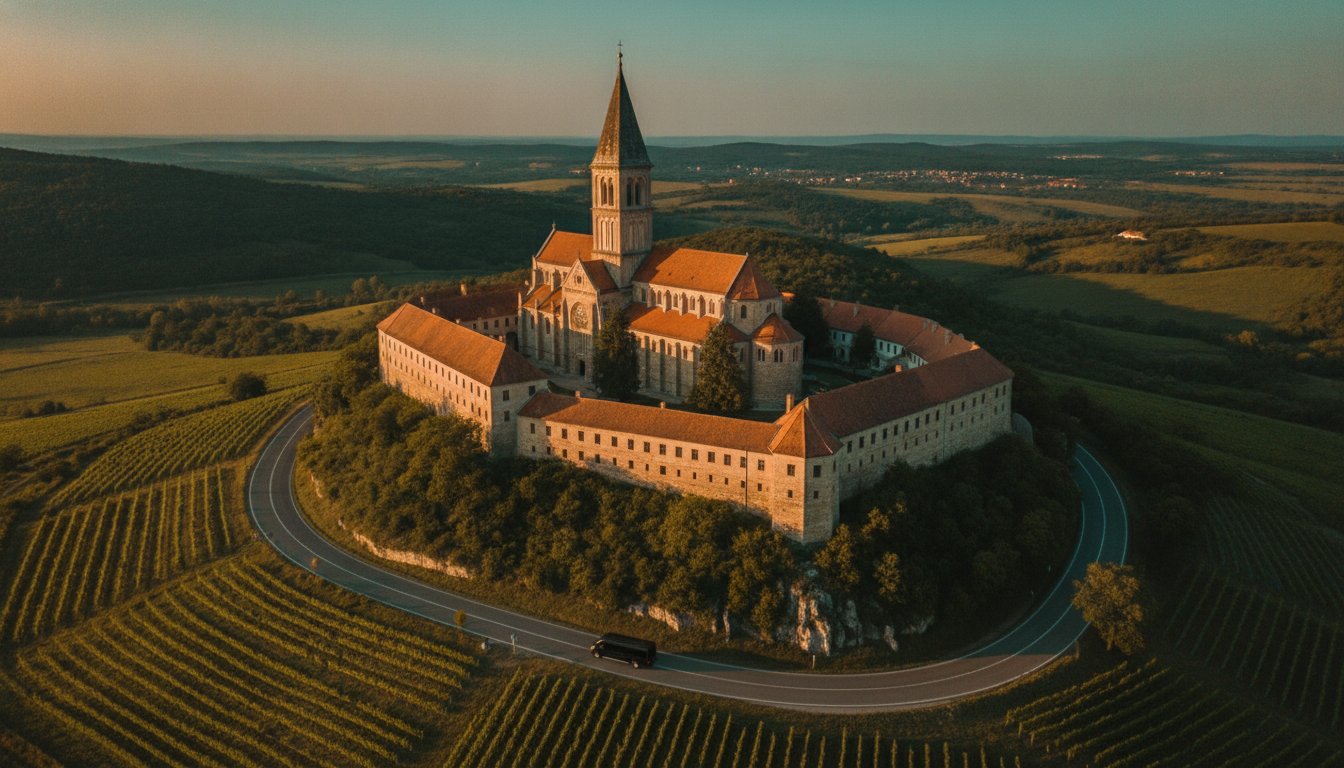
Can a single hilltop monastery hold the entire 1,000-year history of a nation within its walls? The archabbey of pannonhalma isn’t just a monument; it’s a living, breathing spiritual center where monks still follow the Rule of Saint Benedict today. Founded in 996, this UNESCO World Heritage site offers a rare blend of medieval architecture, a world-renowned library housing 400,000 volumes, and a modern, award-winning winery. It’s a place where ancient silence meets modern premium tourism.
You likely want to experience this cultural treasure without the headache of navigating rural transport or missing the hidden herbal gardens. We know that coordinating a visit to such a complex site can feel overwhelming. This guide provides everything you need for a perfect 2026 visit. You’ll learn how to explore the historic basilica, taste local Benedictine wines, and ensure your journey is as smooth and spiritually enriching as the destination itself. We’ve simplified the logistics so you can focus on the wonder.
Key Takeaways
- Master the historical significance of Hungary’s oldest monastery and its millennium-long Benedictine heritage.
- Identify the five essential highlights to visit within a three-hour window, from the ancient basilica to the world-famous library.
- Navigate the 2026 admission options and tour resources to ensure you don’t miss hidden gems like the herbal gardens.
- Learn how to integrate a visit to the archabbey of pannonhalma as a premium sightseeing stop during your private transfer between Central European cities.
- Plan a sensory finale at the Abbey Winery with expert advice on booking tastings and coordinating stress-free transport.
The Significance of Pannonhalma Archabbey: A Living UNESCO Heritage
Pannonhalma stands as the bedrock of Hungarian Christianity. Prince Géza and King Stephen I established this spiritual powerhouse, and the monastery has served as a vital bastion of European culture and Christian thought since its foundation in 996 AD. It’s much more than a collection of old stones. The Pannonhalma Archabbey serves as a „living” UNESCO World Heritage site. This means the Benedictine monks have maintained their traditions at the archabbey of pannonhalma for over a millennium without interruption. Today, it remains a functioning monastery, a prestigious boys’ boarding school, and a vibrant cultural center. You’ll feel the weight of history in every hallway.
The Architectural Marvels of the Hill of Saint Martin
The complex dominates the landscape from the Hill of Saint Martin. You’ll find the Basilica and Crypt particularly striking. They showcase a seamless blend of Romanesque, Gothic, and Renaissance styles. Don’t overlook the Porta Speciosa. This red marble entrance isn’t just a doorway; it symbolizes the spiritual transition from the secular world to the sacred monastery. It’s a breathtaking sight that demands a quiet moment of reflection.
The Great Library: A Sanctuary of Knowledge
Stepping into the Great Library feels like entering another era. This neoclassical hall houses 400,000 volumes. It’s a true sanctuary for scholars and history buffs. The archives contain the Foundation Charter of the Abbey of Tihany, which is the oldest surviving document containing Hungarian words. Visiting the archabbey of pannonhalma offers a profound connection to the intellectual roots of Central Europe. It’s an essential stop for anyone seeking a deeper understanding of the region’s past. For those inspired by this academic tradition and looking for bilingual primary education in nearby Vienna, you can check out Meridian Private Primary School.
Planning Your Visit: 2026 Resources and Must-See Highlights
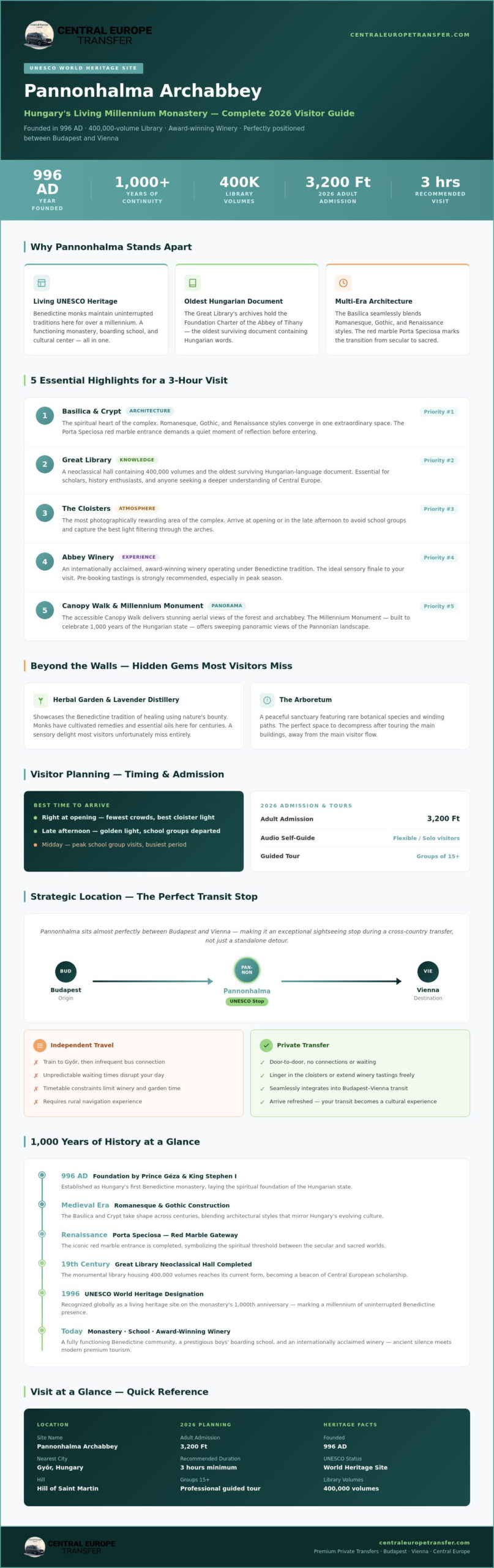
Planning a visit to this UNESCO World Heritage Site requires a strategic approach. While many assume the site is strictly for the religious, it’s actually a masterclass in art, architecture, and landscape design. For a standard three-hour visit, prioritize these five locations: the Basilica, the Great Library, the Cloisters, the Abbey Winery, and the Canopy Walk. These spots offer the most comprehensive view of the site’s dual nature as a spiritual and cultural powerhouse.
To capture the best light in the cloisters and avoid large school groups, arrive right at opening or in the late afternoon. This timing ensures a quieter, more contemplative atmosphere. For 2026, adult admission is 3,200 Ft. Audio self-guides offer excellent flexibility, but professional guided tours are invaluable for groups of 15 or more. If you prefer a seamless journey without the stress of rural navigation, booking one of our private day trips ensures you arrive refreshed and ready to explore.
Beyond the Walls: The Arboretum and Herbal Garden
The Arboretum is a peaceful sanctuary featuring rare botanical species and winding paths. It’s the perfect place to decompress after touring the main buildings. Nearby, the Herbal Garden and Lavender Distillery showcase the Benedictine tradition of healing. You can see how the monks have used nature’s bounty for centuries to create remedies and essential oils. It’s a sensory delight that many visitors unfortunately overlook. Travelers who appreciate natural wellness experiences may also want to explore the restorative properties of the Hévíz thermal lake, Hungary’s legendary healing waters located just a short drive away in the western Transdanubia region.
The Millennium Monument and Canopy Walk
The Millennium Monument offers staggering panoramic views of the Pannonian landscape. It was built to celebrate 1,000 years of the Hungarian state and remains a powerful symbol of national identity. For the best photography spots, head to the accessible Canopy Walk. It provides a unique perspective of the forest and the archabbey of pannonhalma from above. It’s an easy walk that delivers high visual rewards.
Elevating the Journey: Logistics and the Benedictine Winery
Getting to the archabbey of pannonhalma independently is possible, but it’s genuinely cumbersome. The nearest train station is in Győr, followed by an infrequent bus connection that adds unpredictable waiting time to your day. For a site this rich, you don’t want to be watching a timetable. Private transport solves this completely, giving you the freedom to linger in the cloisters or extend your winery tasting without a second thought.
The monastery sits almost perfectly between Budapest and Vienna, which makes it an exceptional sightseeing stop during a cross-country transfer rather than a standalone detour. Instead of a forgettable motorway journey, your transit becomes a genuine cultural experience. You arrive at your destination having already seen one of Central Europe’s most extraordinary landmarks.
The Benedictine Winery Experience
The Benedictine winery is internationally acclaimed for a compelling reason: the cool-climate conditions of the Pannonhalma-Sokoróalja wine region produce exceptional Riesling, Pinot Gris, and Pinot Noir with a distinctive mineral character that’s won recognition well beyond Hungary’s borders. The winery’s gravity-flow architecture is itself worth admiring; it’s a striking piece of contemporary design built directly into the hillside, contrasting beautifully with the ancient monastery above.
Tutored tastings are available in formats of three, five, or seven wines. Book your session in advance through the official abbey website, as slots fill quickly during summer months. Tastings typically run 45 to 60 minutes and are conducted in a dedicated cellar environment. It’s a genuinely immersive experience.
Travel Like a King: The Private Transfer Advantage
Here’s where the logistics become effortless. An English-speaking professional driver handles every navigational detail while you focus entirely on the tasting experience. You never face the impossible choice between enjoying the wines and driving afterward. Your driver waits, your route stays flexible, and your day remains entirely yours.
- Door-to-door service: No rental cars, no bus schedules, no stress.
- Customizable routes: Combine Pannonhalma with other day trips from Budapest or regional highlights like Győr’s baroque old town. Travelers continuing south can also take advantage of our seamless Budapest to Kecskemét private transfer to explore Hungary’s Great Plain without the hassle of public transport.
- Fixed pricing: No hidden costs or surprise fees at the end of the journey.
Just book and we do the rest. Your only job is to enjoy every extraordinary moment.
Your 2026 Pannonhalma Visit Starts With One Smart Decision
The archabbey of pannonhalma rewards those who arrive prepared and leave the logistics to someone else. You’ve seen how this millennium-old site delivers on every level: breathtaking architecture, a library holding the roots of Hungarian written language, and a winery producing wines that genuinely surprise.
Three things will define your experience. First, timing your arrival to avoid crowds. Second, prioritizing the highlights that match your interests. Third, and most critically, choosing transport that keeps your day flexible and completely stress-free.
That’s exactly where we come in. Fixed-rate pricing means zero hidden costs. Our professional English-speaking drivers handle every navigational detail while you focus on the experience. Our premium vehicle fleet ensures you arrive refreshed, not frazzled.
Don’t let unreliable rural connections or rigid timetables shrink what should be an extraordinary day. Book Your Premium Private Transfer to Pannonhalma Today!
Just book and we do the rest. Your perfect 2026 visit is closer than you think.
Frequently Asked Questions About the Archabbey of Pannonhalma
How much time do I need to visit the Archabbey of Pannonhalma?
Plan for a minimum of three hours to cover the essential highlights comfortably. This gives you enough time to explore the Basilica, the Great Library, the Cloisters, and the surrounding grounds without feeling rushed. If you intend to add a winery tasting session, budget an additional 45 to 60 minutes on top of that. A half-day visit of four to five hours is genuinely the sweet spot for a thorough, unhurried experience.
Is the Archabbey of Pannonhalma open to the public every day?
The archabbey of pannonhalma is generally open to visitors throughout the week, though opening hours vary by season. The site typically operates reduced hours during winter months and may have limited access on certain religious feast days when the monastic community holds services. We strongly recommend checking the official abbey website before finalizing your travel dates, as 2026 schedules and any temporary closures will be confirmed there.
Can I visit the winery without touring the Archabbey?
Yes, the Abbey Winery operates independently and accepts visitors who haven’t purchased a general admission ticket to the monastery complex. You can book a tutored tasting directly through the winery’s reservation system, choosing from sessions covering three, five, or seven wines. That said, combining both experiences in a single visit is far more rewarding, and private transport makes this seamless since you’re not constrained by bus schedules or parking concerns.
Are there English-speaking guides available at the monastery?
English-language guided tours are available at the site, though availability can be limited during peak summer months, so booking in advance is advisable. Audio self-guides also offer a solid English-language alternative with genuine flexibility for solo travelers or couples who prefer to set their own pace. For larger groups of 15 or more, a professionally led English tour is highly recommended to fully appreciate the historical and architectural depth of the site.
Published: 2026 július 16